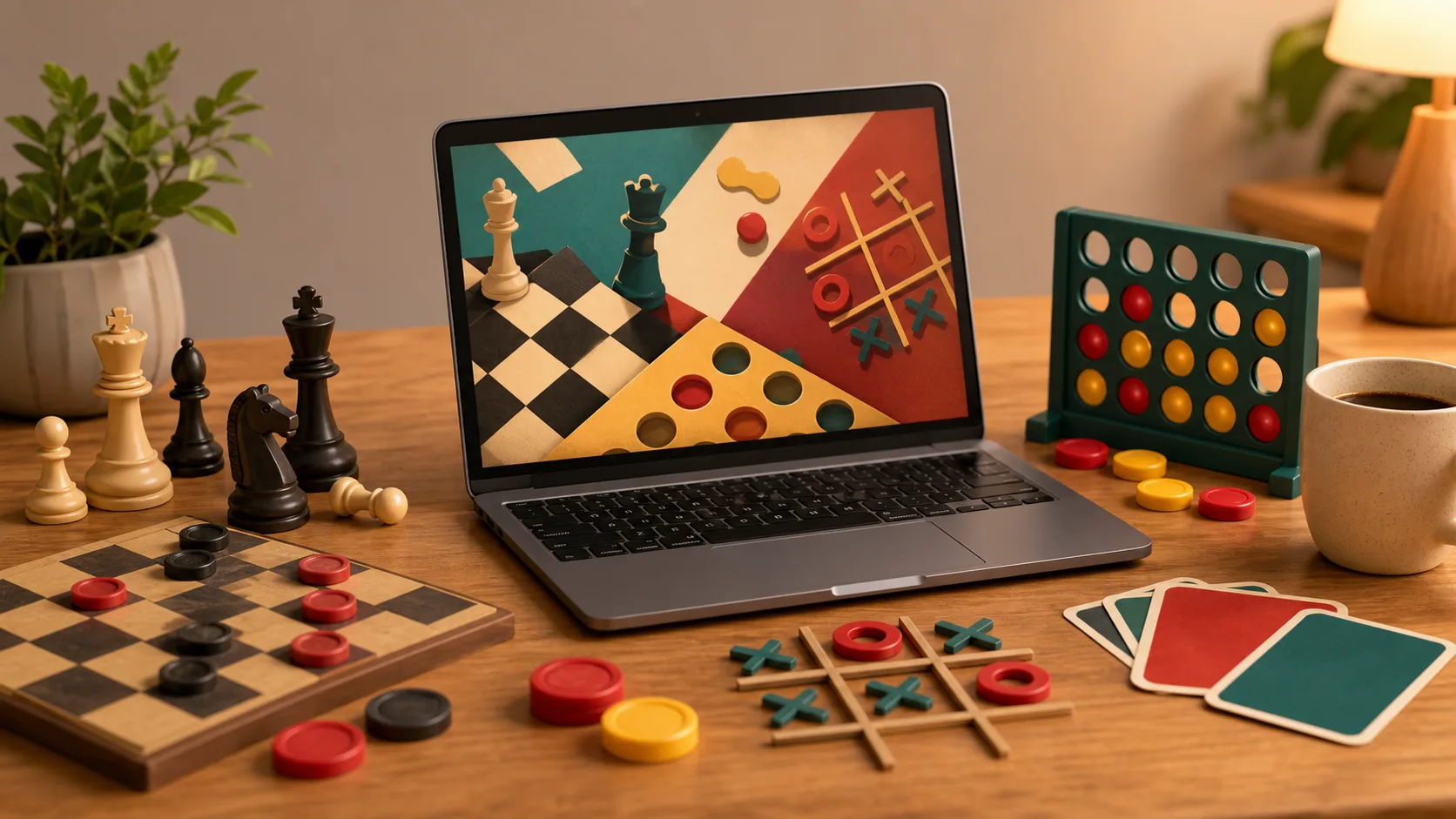
Built-in opponent games are for the moment when you want the page to push back without joining an online room. The opponent might be a bot, a keeper, a local challenge hand, or a moving rally target. The important part is that the pressure is inside the browser game, not remote matchmaking.
Choose The Kind Of Opponent
For board logic, start with Chess, Checkers, Tic Tac Toe, or Connect Four. Chess and Checkers reward slower tactical reads. Tic Tac Toe and Connect Four are better for short first-to-three rematches with visible lessons after each board.
For card-table pressure, try Palette Duel. It is not a traditional board, but it has the same feeling of answering the next move: match hue, number, or symbol while keeping enough playable cards in hand.
Sports Opponents Feel Different
Penalty Cup and Penalty Kick make the keeper the obstacle. You are not reading a board; you are choosing a lane, waiting for the shot window, and learning from saves. Table Tennis and Badminton Smash use rally pressure instead. The opponent matters because you must recover after each return.
Stickman Fighter and Boxing Ring are reaction games with visible tells. They reward blocking, dodging, or repositioning before attacking.
What These Games Are Not
These are not remote multiplayer rooms. They do not require sign-up or matchmaking. Some save local wins, draws, best rallies, or best finishes on the same device, but that is browser progress, not a public ladder.
That expectation keeps the experience clear. Choose these games when you want a short challenge that answers your move immediately.
First Picks
Open Tic Tac Toe if you want the fastest lesson, Connect Four if you want a slightly deeper board, Chess if you want the richest rules, Palette Duel if you want hand management, and Penalty Cup if you want a sports challenge with rounds. If another person is next to you, switch to the same-device games guide instead.