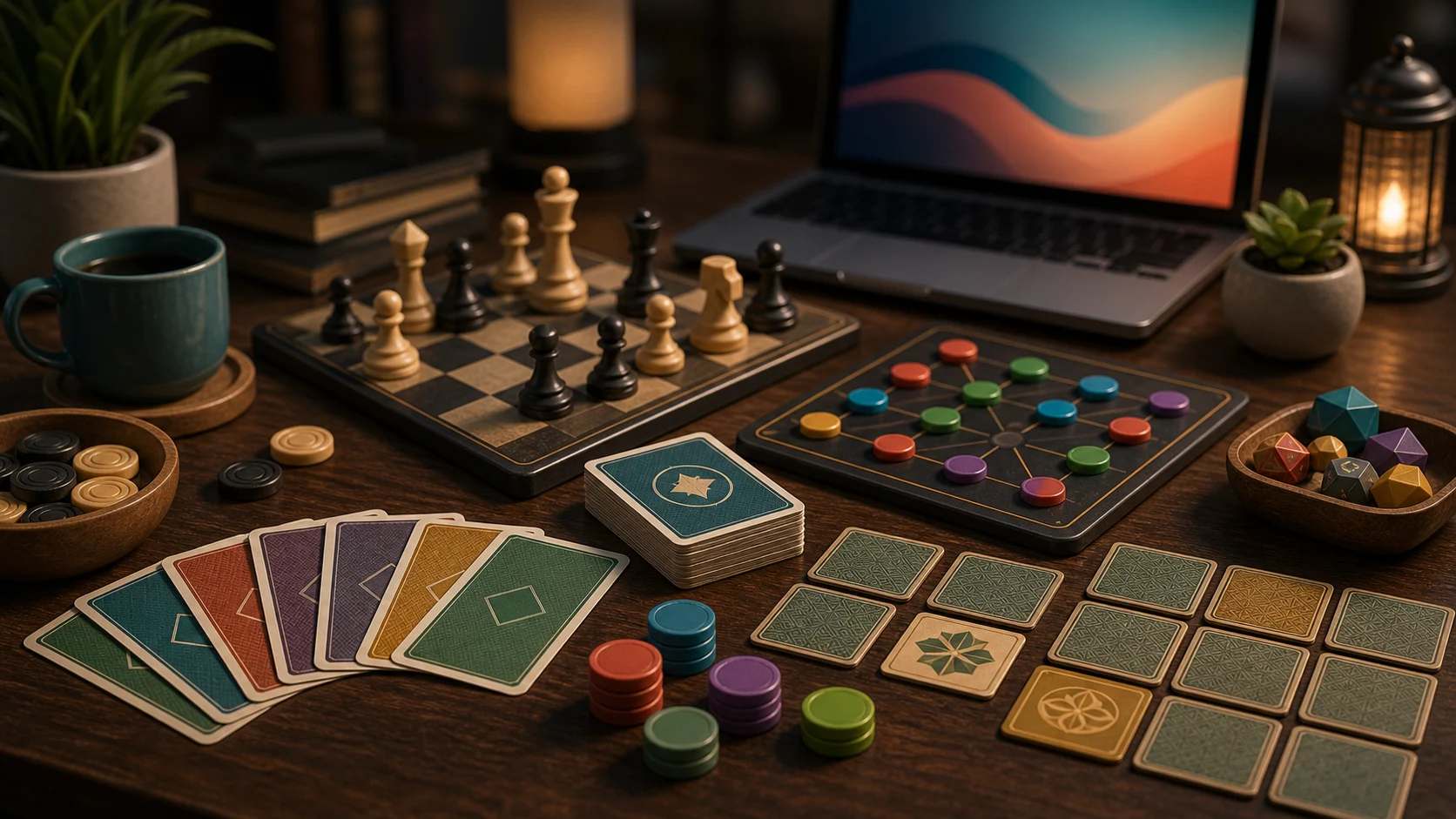
Card and board games work well in the browser when the table is clear and the goal is familiar. The best first choice depends on whether you want a solo card puzzle, a bot board, a memory game, or a same-device turn game.
Start With Solo Cards
For classic solo play, try Solitaire, FreeCell, or Spider Solitaire. Solitaire is about opening the hidden tableau. FreeCell keeps every card visible and rewards preserving open cells. Spider Solitaire is about building descending same-suit runs and clearing full sequences.
Choose Solitaire when you want the most familiar rhythm. Choose FreeCell when you want more planning. Choose Spider Solitaire when you want a longer table puzzle.
Choose A Board Opponent
Chess and Checkers are the deeper board choices. Tic Tac Toe and Connect Four are better when you want fast rematches and visible lessons. The right board is the one that matches your available attention, not the one with the most rules.
Palette Duel sits between card and board play. It asks you to manage a hand against a table card, matching by hue, number, or symbol.
Shared-Screen And Memory Tables
If someone is nearby, Ludo, Dots & Boxes, and Air Hockey make sense as same-device breaks. They are not remote multiplayer rooms; they work best when the device is physically shared.
For a lighter solo table, Memory Match is the simplest start. It is about remembering card positions and using misses as information.
A Simple First Choice
Pick Solitaire for a solo card table, Connect Four for a short bot board, Memory Match for quick recall, and Air Hockey or Dots & Boxes for nearby shared play. If you mainly want planning games, read Strategy Games For Short Browser Plans.