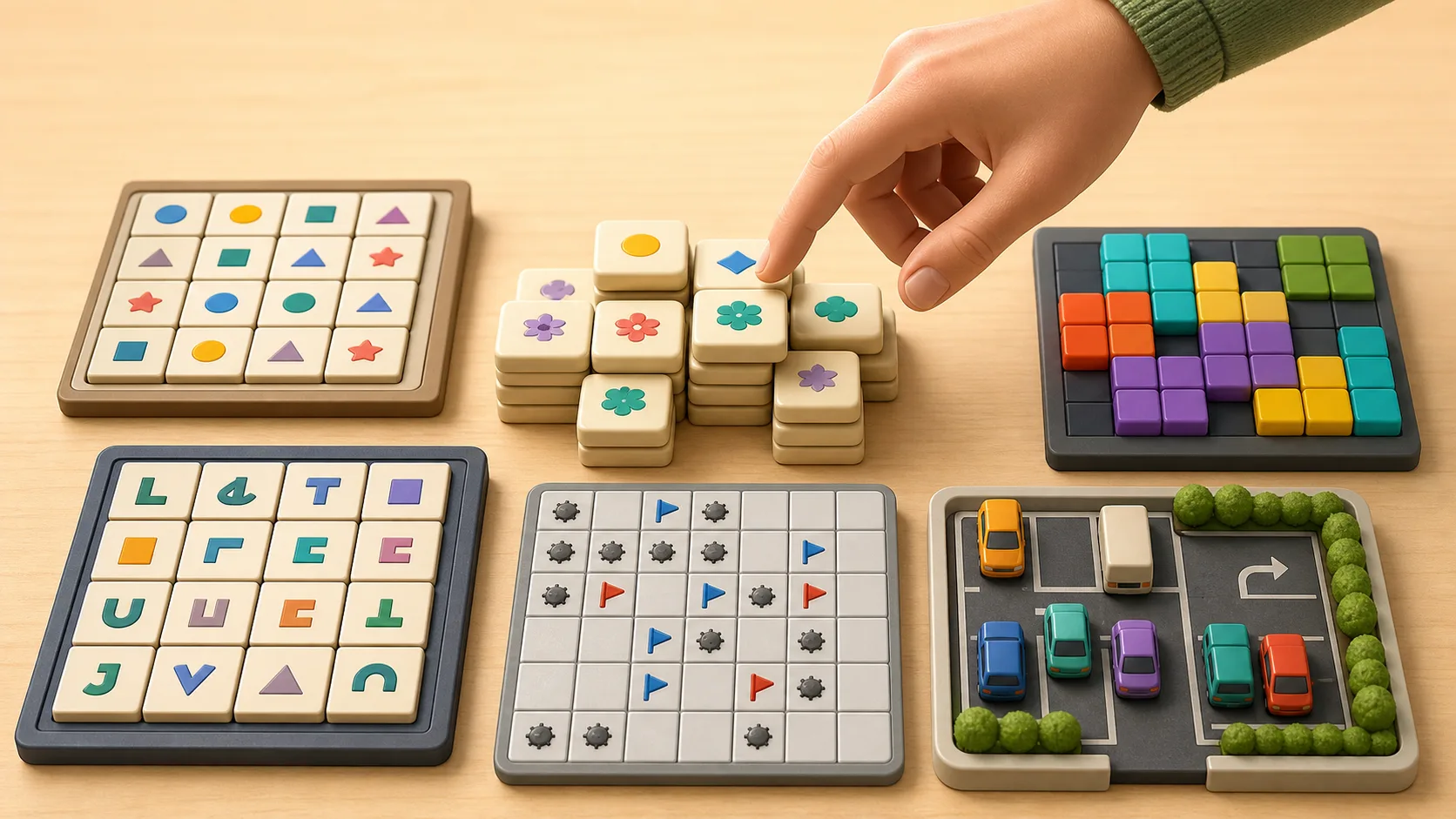
A puzzle often feels hard because the first move is random. The board is new, every option looks possible, and a bad opening can make the next five moves feel worse. The better first move is usually the one that reveals the rule of the board.
Read The Board Before Moving
In Sudoku, scan rows, columns, and boxes before adding notes. In Minesweeper, reveal a safe opening and count what each number proves. In Nonogram, look for lines where clues overlap no matter how they are placed.
These games reward evidence. If the first move is a guess, you probably have not looked at the most constrained part of the board yet.
Start With Space In Placement Puzzles
In Block Puzzle, place awkward shapes before easy ones and protect the middle. In Connect the Dots, solve tight edge pairs and plan long routes before filling the center. In Parking Lot Escape, trace the exit row before sliding any vehicle.
The common rule is space. The first move should keep future moves alive.
Start With The Goal In Matching Puzzles
In Candy Swap or Garden Jelly Match, look at the level goal before swapping. In Mahjong Solitaire, choose pairs that free blocked layers. In Word Search, pick one target word and scan systematically.
A move is good when it changes the board in the direction the puzzle actually needs.
A Simple First-Move Checklist
Before moving, ask: what is the goal, what is most constrained, and what future space must stay open? That checklist works across most browser puzzles. If you still feel stuck after the opening, read Puzzle Games That Help When You Get Stuck for notes, hints, undo, and safe-start options.