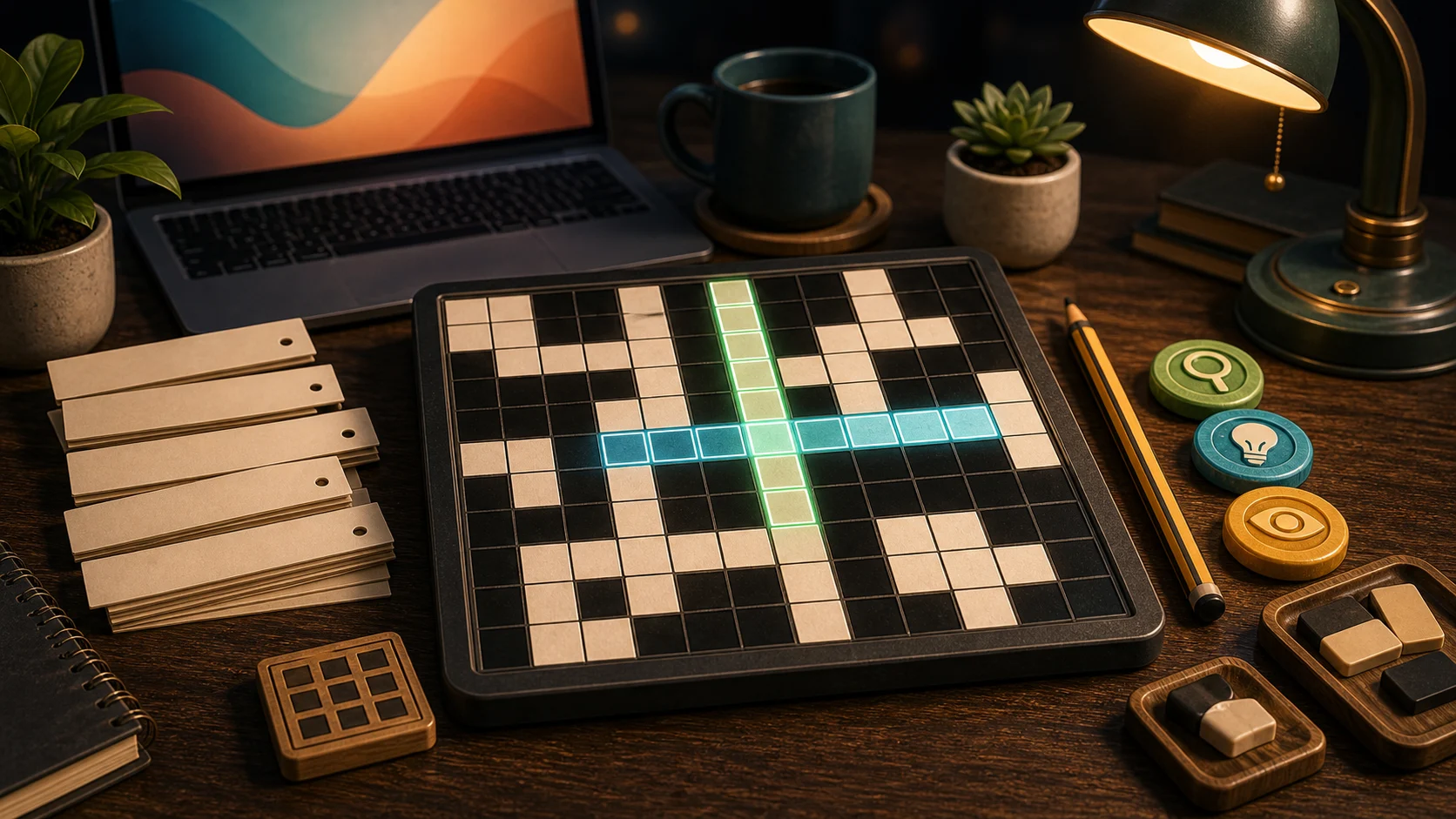
Crossword is easier when you let sure answers create letters for harder answers. The grid is compact, so one confirmed crossing can change the whole puzzle. Guessing too early usually makes two clues harder instead of one.
Fill The Known Clues First
Start with the shortest clues or the answers you know immediately. Type them in, then look at the crossing letters they create. A partial crossing can turn a vague clue into a clear one.
Do not force a long answer just because it feels close. If one uncertain letter touches another answer, it can poison the grid. Leave it blank until another crossing confirms it.
Use The Support Controls Carefully
Check puzzle marks filled letters, Reveal letter helps with one stuck square, and Clear word empties the active answer. These are best used as learning tools, not as a way to skip the whole grid. If a single square blocks progress, reveal that square and keep solving.
New puzzle rotates through original local mini-grids in the browser, so you can practice without treating one grid as a final exam.
When Guessing Hurts
Guessing hurts most when an answer looks familiar but the crossings disagree. Trust the crossings. If two or three checked letters do not fit your idea, clear the word and come back later.
A good crossword pace is uneven. Some clues fall immediately; others need the grid to grow around them. That is normal, not a sign you are stuck.
One Clue Habit
For one puzzle, do not enter an answer unless you can explain either the clue or one crossing. This keeps the grid clean and makes mistakes easier to find. If you want another word puzzle with scanning instead of clues, try Word Search. If you want number logic, open Sudoku.