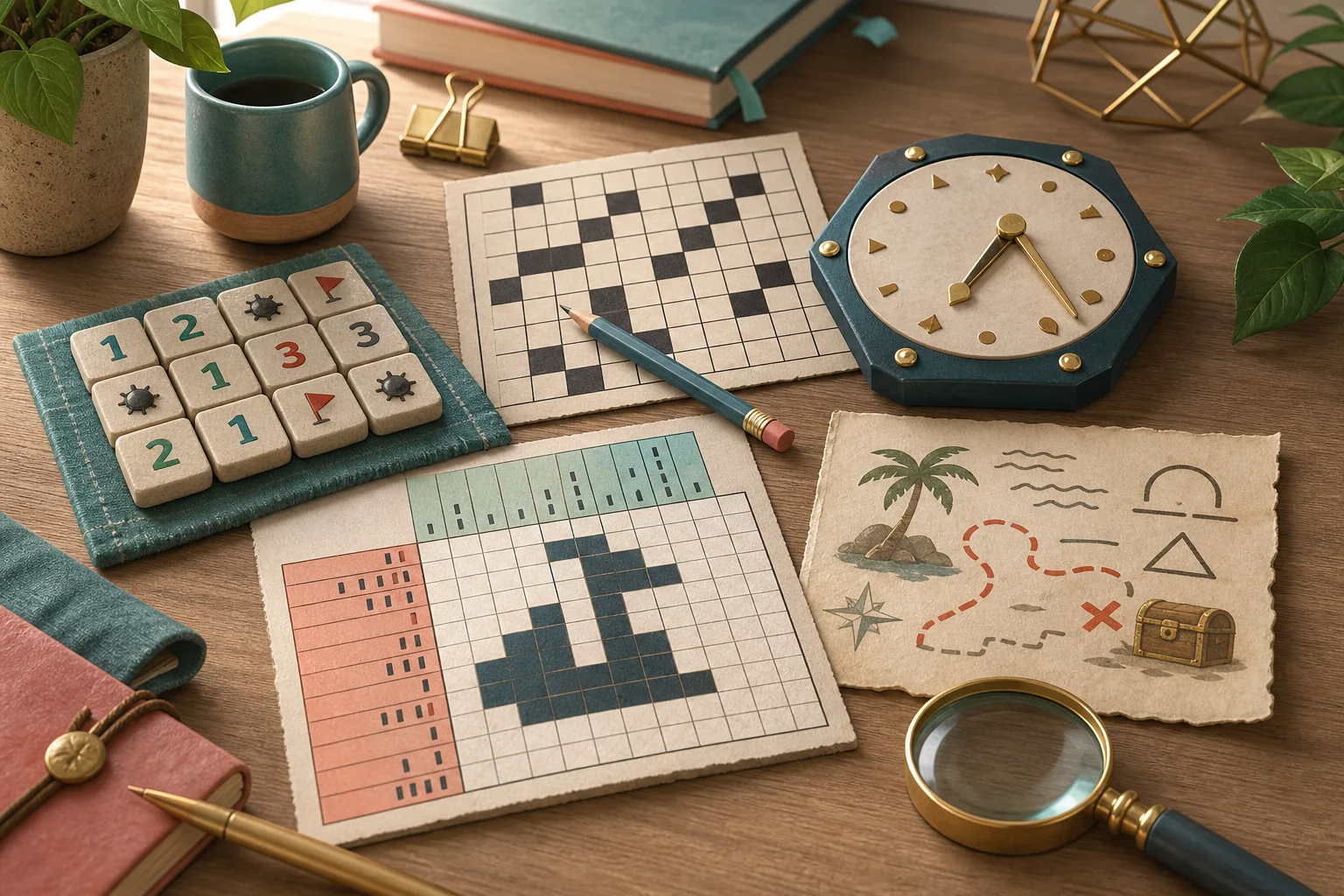
Clue-based games are for players who want the screen to give them evidence before they move. The clue might be a number, a word prompt, a room object, or a hidden pattern. The shared habit is the same: read first, act second.
Choose The Clue Type
For number clues, start with Minesweeper, Nonogram, or Sudoku. Minesweeper numbers count hidden mines. Nonogram clues describe filled cell runs. Sudoku uses row, column, and box constraints.
For word clues, try Crossword or Word Tile Studio. Crossword uses clue text and crossings. Word Tile Studio asks you to build words from letter tiles against a prompt.
Room And Object Clues
If you like inspecting a scene, open Puzzle Room Escape, Clocktower Escape, or Treasure Hunt. These games work best when you slow the first minute down. Inspect the visible clue surfaces, then make one testable move.
For a route-based clue feel, Lantern Dungeon and Maze Runner shift the focus from objects to paths.
What Makes A Clue Game Satisfying
A satisfying clue game gives feedback you can trust. A revealed number, a crossing letter, a gate latch, or a marked blank should help the next decision. If you are guessing repeatedly, change the question: what has the game already proved?
Most of these games run as compact browser sessions with no download or sign-up. Some save best times, move counts, or local progress on the same device.
First Route
Start with Minesweeper if you like counting, Crossword if you like language, Clocktower Escape if you like room inspection, and Nonogram if you like visual logic. If you get stuck often, the puzzle recovery guide compares hint, undo, safe-start, and marking tools.