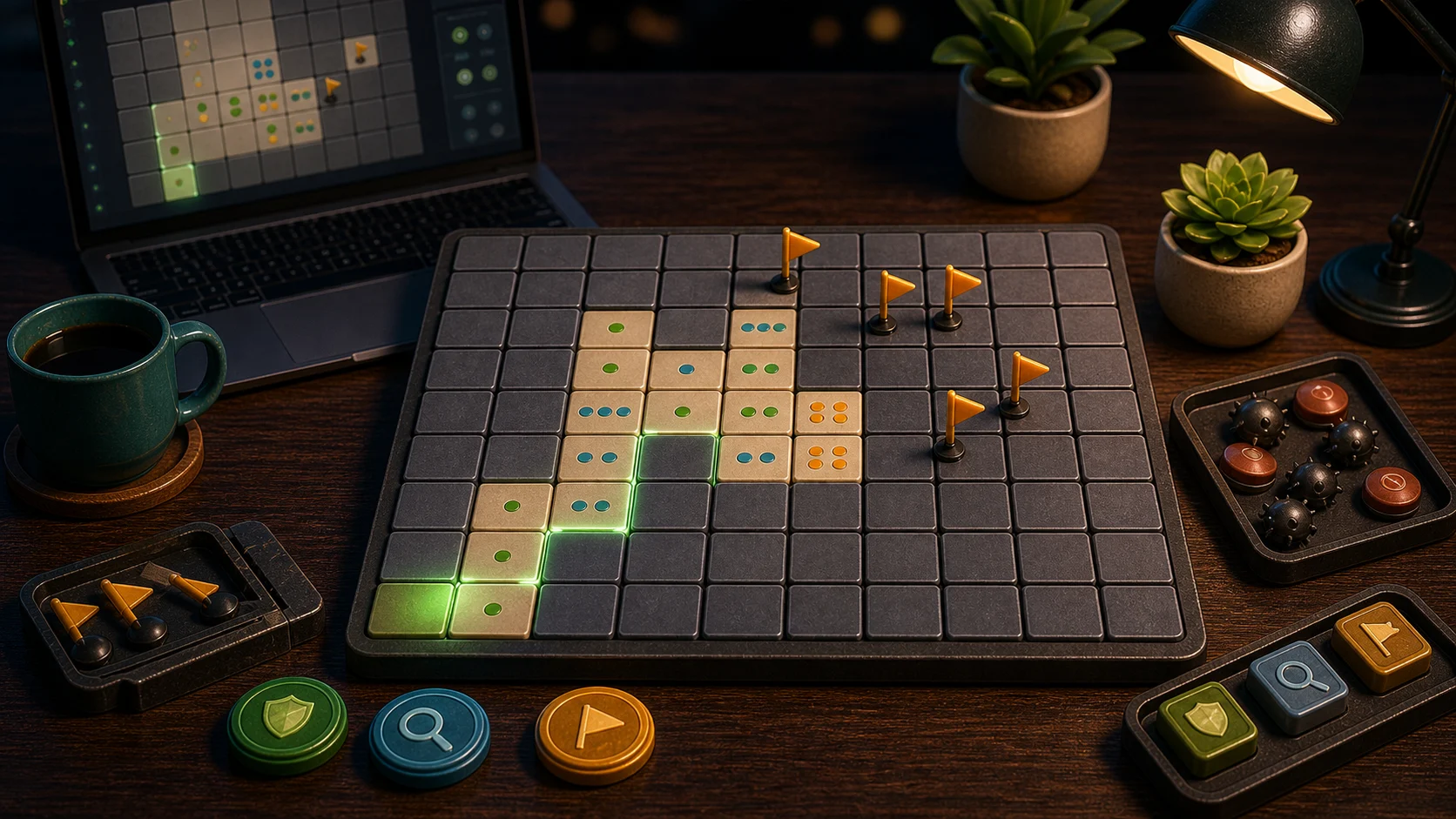
Minesweeper is a logic puzzle with a small amount of nerve. Every number tells you how many hidden mines touch it. The best players are not guessing faster; they are counting what the board has already proved.
Start With The Safe Opening
Pick Easy, Medium, or Hard before the round. The first reveal is always safe, and Safe Start can open a covered safe cell when you need an entry point. Use that opening to create a cluster of numbers, then slow down.
A number only matters in relation to its covered neighbors. Count the hidden cells touching it. If the number is 1 and only one covered neighbor remains, that neighbor is a mine. If the mines around a number are already flagged, the other touching covered cells are safe.
Flag What Is Proven
Use Dig and Flag mode on touch, right-click or press F for flags, and use C or click a revealed number to chord matching flags. Flagging is powerful when it is based on proof. Over-flagging creates confusion because a wrong flag can make every nearby number lie to you.
The challenge card tracks safe-cell progress, mistakes, over-flags, and perfect clears. Treat those as feedback about your logic, not just your final time.
Where Guesses Sneak In
Guesses sneak in when you reveal a square because it feels likely. If two options are equally possible, look elsewhere first. Another part of the board may provide a number that breaks the tie.
Best clear times save on this device for each difficulty, but speed should come after accuracy. A slower clear with fewer mistakes teaches more than a fast failed board.
One Grid Habit
For one board, do not dig beside a number until you can explain what that number proves. If it proves nothing yet, move to another clue. For more number logic, try Sudoku. For a picture-grid puzzle that also rewards marking known blanks, open Nonogram.