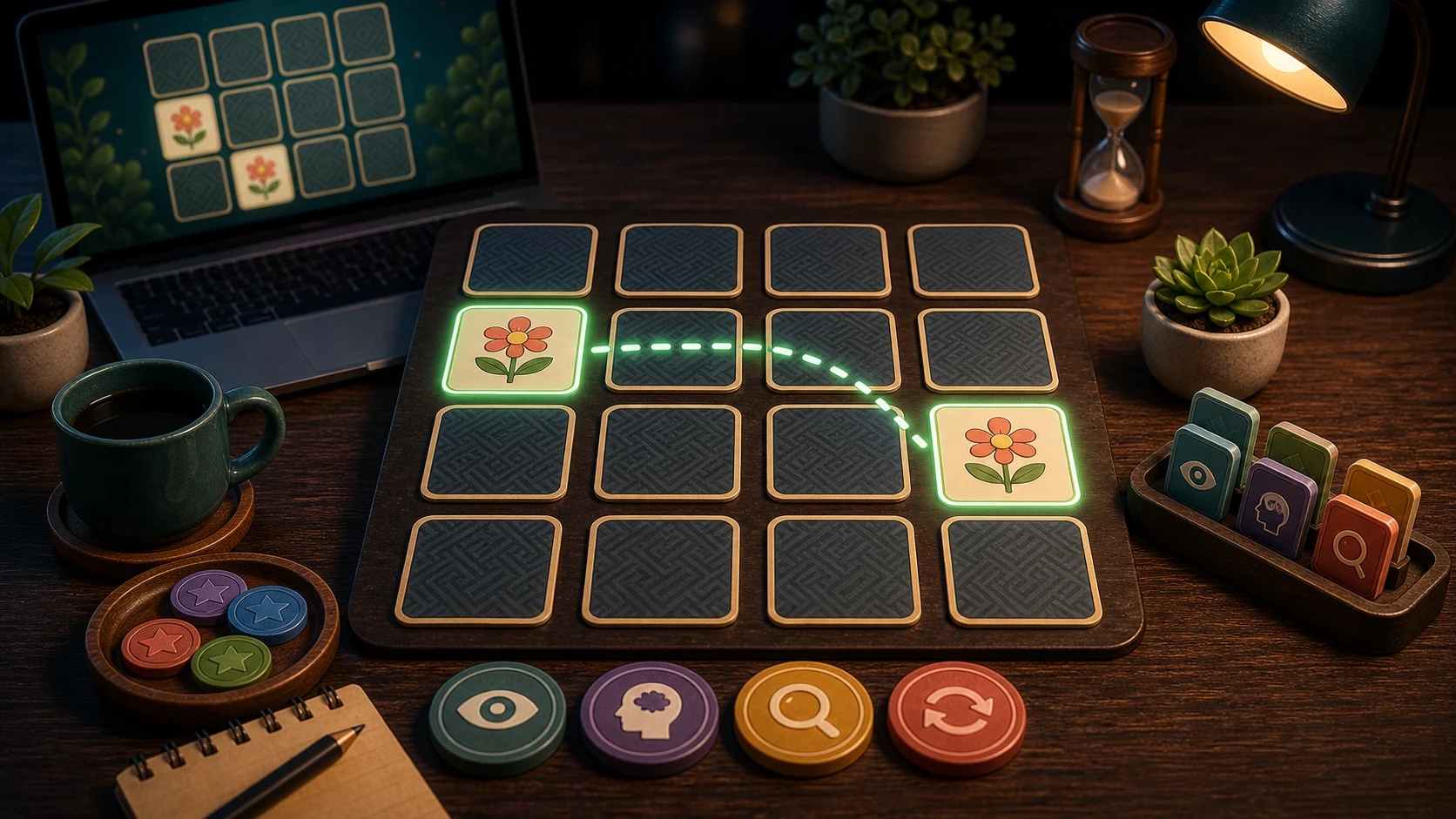
Memory Match improves when you treat every flip as information, including the misses. The board grows across levels, and limited peeks are most valuable when the layout is crowded, not when the first few pairs are still easy to track.
Name The Card Position
When you reveal a card, give it a quick label in your head: top left star, middle row shell, bottom right moon. The exact words do not matter. The point is to connect the picture to a location before you flip the next card.
If the second card does not match, pause for a beat. A miss resets combo, but it also gives you two positions for later. Rushing past that information is how the board turns blurry.
Save Peeks For Crowded Boards
Each board grows from smaller layouts toward larger ones. Early peeks are tempting, but they are usually more valuable once there are more pairs to track. Use peeks when two or three cards are blocking a finish, not when the board is still wide open.
Matched pairs raise combo and score. The best combo runs come from remembering misses, not from flipping quickly.
Where Memory Runs Blur
Memory runs blur when every unknown card feels the same. Slow down enough to create a small map. Corners, edges, and row positions are easier to remember than vague “somewhere over there” locations.
The recap shows score, time, moves, and best combo, with best scores saved by level on this device. Use the recap to decide whether your next run should focus on fewer moves or better combo control.
One Pair Drill
Play one board where you say the position before flipping the second card. That small pause builds recall and makes misses count. If you want a tile-matching puzzle with visible pairs instead of hidden cards, try Mahjong Solitaire. For a word memory-style scan, open Word Search.