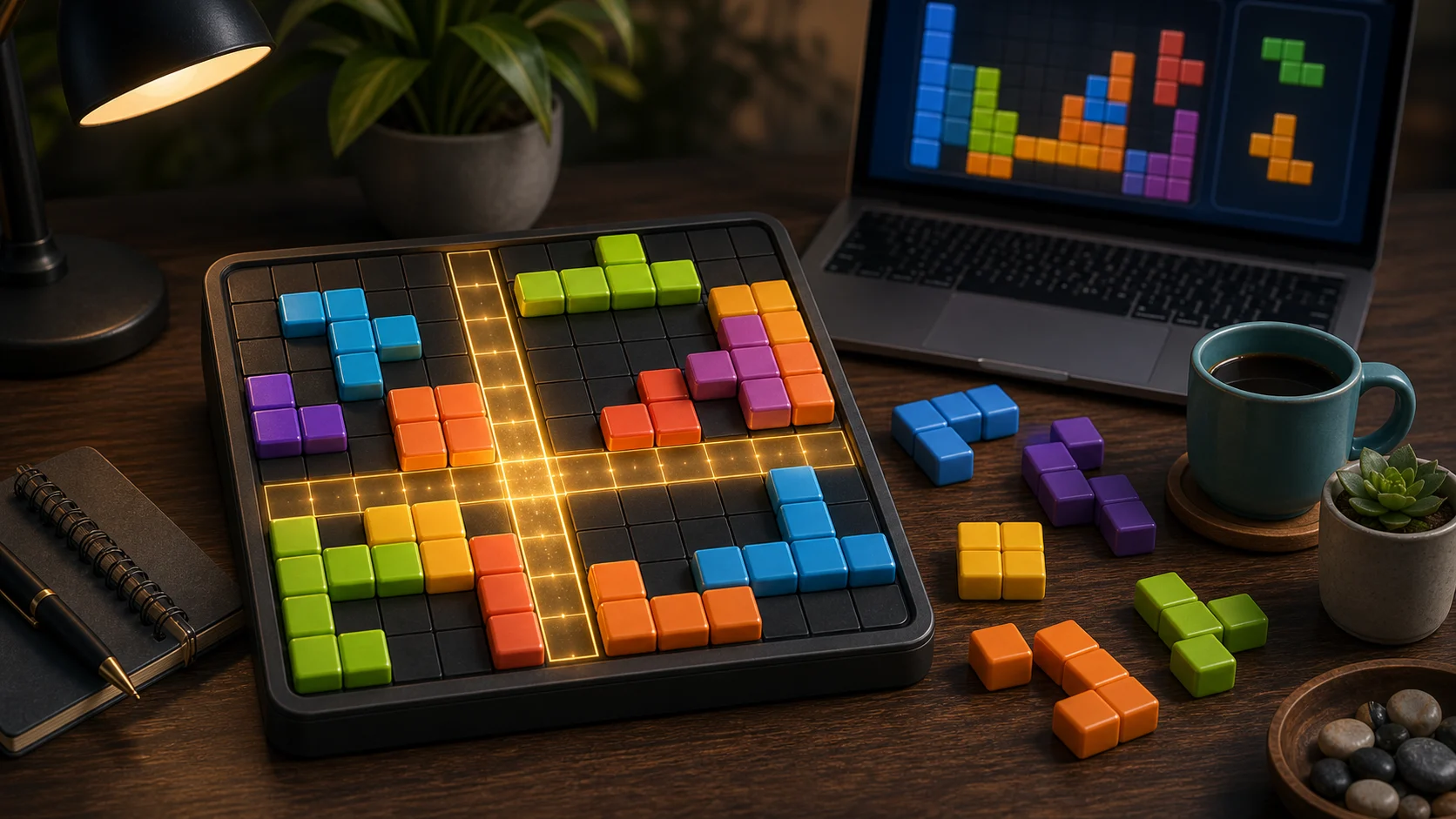
Block Puzzle is won by the empty spaces you protect. A row clear feels good, but a board full of awkward holes can lose even after several clears. Treat each placement as a way of shaping the next few moves, not only the current score.
Protect The Middle
The middle of the 10 by 10 grid is the most flexible space. Long bars, corners, and chunky shapes all need room to land. If you fill the center early with small pieces, the board can look tidy while quietly losing the ability to accept the next awkward shape.
Drag a piece onto the board, or tap a piece and then tap a landing cell. Ghost cells show valid placement, while striped cells mark blocked landing spots. Use those signals to check whether a move is truly playable before committing.
Place Awkward Shapes First
When you have three pieces available, look for the hardest one first. A small square can usually fit later. A long bar or L shape needs a more specific opening. If you place the easy shape first because it clears a line, the bigger piece may suddenly have nowhere to go.
Clear rows and columns when they open future space. A clear that leaves a jagged corner is sometimes worse than a quiet placement that keeps the board smooth.
Watch For Hidden Traps
Single-cell holes are the most common trap. They do not matter immediately, but they block larger shapes and force future placements around them. If a move creates a hole you cannot clear soon, think twice before taking it.
The game saves your best score on this device, so it is worth practicing one habit at a time. Do not try to maximize every move. Try to keep one large landing zone open for as long as possible.
One Board Habit
Play one board where the center stays open for the first ten placements. You may score less at first, but you will feel how much easier later shapes become. If you want a puzzle with merging instead of placement, 2048 is the closer match. If you want a board with clues, try Sudoku or Nonogram.