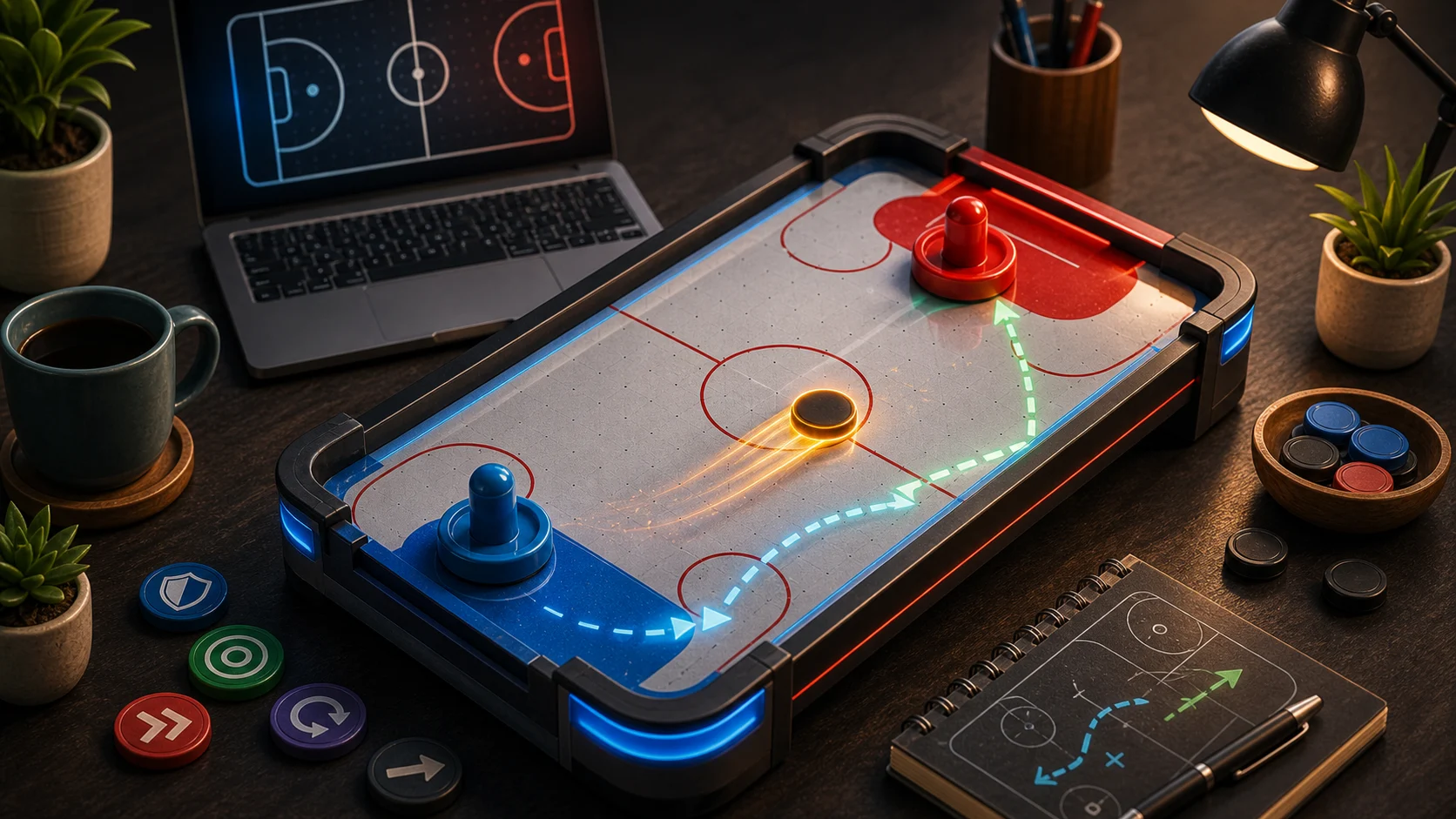
Air Hockey is a quick shared-screen game, so the first skill is not shooting harder. It is keeping your paddle between the puck and your goal while still leaving yourself a way to attack. If you chase every rebound across the table, the puck usually slips behind you before you can recover.
Start From Defense
Hold a line slightly in front of your goal instead of parking inside the goal mouth. That gives you time to meet slow shots and still reach side rebounds. On touch, drag inside your half and keep the paddle moving in short corrections. On keyboard, one player uses WASD while the other uses arrows, so both players can share the same screen without swapping controls.
The safest first rally is simple: stop the puck, then choose the return. A centered block may not score, but it prevents the easiest mistake, which is swinging past the puck and giving the other player an open goal.
Use Banks Only When The Middle Is Covered
Bank shots matter when the other paddle sits in the middle. If the middle lane is open, a straight push is often enough. If the other player blocks that lane, aim at a side wall and let the puck return at an angle. The point of the bank is not style; it is making the defender move sideways before the shot reaches the goal.
Short moves near the center line are better than long lunges. A long lunge can score, but it also leaves your own half uncovered. If a shot rebounds off the far wall, recover first and attack second.
Why Rallies Turn Messy
Most lost points come from overreaching. You see the puck near the center, move too far forward, miss the hit, and then have to race backward. The better habit is to keep your paddle within one quick move of the goal. That way a missed attack is still recoverable.
Also watch the puck speed after contact. A soft touch may invite a second hit, while a hard diagonal shot can rebound into your own side. Treat every hit as a setup for the next position, not a final swing.
Try This Rematch Rule
For one rematch, do not cross the center line unless the puck is already moving away from your goal. That rule forces better defense and makes your attacks more deliberate. If you want another shared-screen game after that, Dots & Boxes gives a slower turn-based break, while Table Tennis keeps the same rally feeling with a different paddle rhythm.